Showing posts with label lectionary. Show all posts

Saturday, April 24, 2010

Lectionary: Fourth Sunday of Easter


Lectionary Passages

Acts 9:36-43
Psalm 23
Revelation 7:9-17
John 10:22-30

For whomever may check in to see what the weekly passages are, I'm sorry I didn't get them up sooner. I have been distracted with life's happenings. I got a second shift job last week in a warehouse that manufactures nutrition bars. I have been training (and doing) on weighing different liquids which get poured into a mixer that basically mixes nutrition bar dough. The job is physically demanding, but it is an example of God answering to our needs and not necessarily the way we want our needs to be met (at least in my case).
On top of that, there have been other "distractions." My wife is pregnant with our second child and I've been dealing with my former employer challenging my unemployment benefits. I won't go into much detail, but I appreciate any thoughts or prayers from anyone who may read this. I am doing my best to keep my spirits up in trying times. Sometimes I succeed at this but sometimes I can't help but feel a bit down.
Ultimately I have hope for the future and hope that I can achieve what God has set before me. So in case anyone was wondering why the updates have been sporadic, I hope you now have a better understanding of why it has been that way.

God bless,

Jason

Thursday, April 8, 2010

Lectionary: Second Sunday of Easter


Lectionary Passages

Acts 5:27-32
Psalm 150
Revelation 1:4-8
John 20:19-31

Hey folks, sorry I'm late getting these up and I apologize for not having the Easter day scriptures posted. Life has simply gotten in the way. It has been a trying time for my family to say the least, but in spite of my own struggles I have found myself continuing to grow by God's grace. I found myself in a unique situation yesterday that unfolded into a real life story of how we can serve others while being in a tough situation ourselves.
A couple weeks ago I heard a sermon on the story of "The Good Samaritan." I won't rehash the whole sermon, but the story was about a person in desperate need being helped by someone who he would least expect, and probably a person who he may not want help from. There was also an anecdotal story within the sermon about a group of college students who ended up being tested on their real life application of the story and they all ended up ignoring an actor portraying someone in need as they were asked to hurry to another part of campus (I apologize for not remembering all the details).
The point of it all was not that we should demonize others for not recognizing those in need within their immediate vicinity or to demonize ourselves, but I took it as a call to be more aware and active in our response to those needs.
So yesterday afternoon I had agreed to drop a friend off at work as well as pick up my sister in-law from work around 5:45-6ish. As I was heading home I found myself stuck behind a car that was stalled in the middle of the road (two lanes both ways with a left turn lane; the car was in the left lane). I started to switch lanes and my immediate response was that I was a bit agitated. I wasn't upset with the people in the parked car, but at the inconvenience of having to work around the car through traffic to get home.
As I pulled past the car many things came to my mind in a short amount of time. The sermon I'd heard a couple weeks prior came to mind. An opportunity to put my conviction of putting my faith in practice came to mind. Lastly, I felt a bit shamed and embarrassed at my initial reaction given my approach and response intellectually to the gospel.
I pulled into a Meijer (a department store) that was at the corner of where the car was stalled and ventured out into the middle of a busy street to see how I could offer any assistance, if any. To make a long story short, I ran to a gas station and bought gas for the family of five in the car. When that didn't work I was able to call a tow and help drive the family members where they needed to be in two separate trips.
As soon as I finished this task I got a call from my friend and picked him up from work as well as brought him to pick up his car from the person who had fixed it. I didn't get home until 10.
I'm not writing this to make anyone think I am a saintly person, or to instill guilt in anyone. I am the most selfish person I know and in all likelihood I've missed out on exponentially more opportunities to help people than I've been able to take advantage of a situation like yesterdays. It seems to me that we are so focused on what we are doing and where we are going that we miss out on what God is putting right in our paths.
My only intention in sharing this with my few readers (or would be readers) is that I hope it prompts a deliberate intention to open ourselves up to these kinds of "inconveniences." I found that in my service of others yesterday that I was truly the one served.

God bless,

Jason

Wednesday, March 31, 2010

Holy Week Scriptures


Lectionary Passages for Holy Week

Monday- Isaiah 42:1-9, Psalm 36:5-11, Hebrews 9:11-15, John 12:1-11

Tuesday- Isaiah 49:1-7, Psalm 71:1-14, 1 Corinthians 1:18-31, John 12:20-36

Wednesday- Isaiah 50:4-9a, Psalm 70, Hebrews 12:1-3, John 13:21-32

Holy Thursday- Exodus 12:1-14, Psalm 116:1-4 12-19, 1 Corinthians 11:23-26,
John 13:1-17 31b-35

Good Friday- Isaiah 52:13-53:12, Psalm 22, Hebrews 10:16-25, John 18:1-19:42

In an effort to increase the quality of this blog for the long run, I will be scaling back the content on the site. I will no longer do analysis on every lectionary text. I will post the text still for those who want to study the scripture each Monday. Holy week has texts for each day, and I apologize for having this week's text up late.
Each month will have a topic on which I will put together a post and I have also invited guests to post on the topic on my site. April's topic is sin and holiness, so keep an eye out for different pieces and please feel free to interact.

God bless,

Jason

Sunday, March 28, 2010

Giving Ourselves to the Greater Good


Liturgy of the Passion-
Isaiah 50:4-9a
Psalm 31:9-16
Philippians 2:5-11
Luke 22:14-23:56

All scripture can be looked up at http://www.biblegateway.com/ for those who may not have immediate access to a Bible.

Analysis- I don't know how many times the story of Christ's death has been told to me, but it is often told with the same meaning implied: That Jesus died for me so that all my sins would be washed away. Often when I heard this story (either in Sunday School or a sermon) the analogy of dirty linen being washed clean would be used. It's amazing to me how the story of the cross has also been made into a success story revolving around our individual salvation. While I don't think this is necessarily always the intent of the person interpreting the story, often times I got the impression that all I had to do was believe in Jesus and that was enough to ensure that I would live forever in heaven. I was told that this decision to believe was easily accomplished with a simple prayer, and often it was implied that I would be set for life, or rather more correctly, beyond life.
While I have no doubts that the many people who present Jesus' death in this way have nothing but the best in mind, I believe that personally many of these spiritual topics were, in fact, not simple or easy to grasp and that they held implications that transcended my youthful understanding of the world. I also believe that looking at the story of Jesus and summarizing it in this way minimizes the gospel and can also stunt our spiritual growth. Keep in mind that I'm not at all saying that Christ didn't die for our sins, or that he didn't die so that he could have an individual relationship with those who are willing, but I'm just saying that we need to ask what that all means for us beyond individual salvation.
For instance, some questions that grew on me from the time I was baptized at a prepubescent age were: What do I do now that I'm a Christian? What does it mean to have a relationship with Christ? If I'm going to heaven anyway, what more should I do? Etc.
Too often, people become Christians and their whole understanding of their relationship is that they are "safe" and their lives become a mission to "save" other people before they die. Obviously I'm leaving out a lot of the steps and theological understandings, but for some, the Christian faith is an ultimatum between choosing God/Jesus/heaven and hell.
While I certainly believe that we are called to invite others into the faith, I don't think Jesus intended for people to make the faith about abstract states of being outside of the realm of this world (heaven or hell). In fact, I think that Christ wanted his people doing his work and accomplishing his will in this world. Why do some Christians try to convert people with limited understandings of the consequences of this life, acting as if we have the final say and not God? Wouldn't our energy be better spent teaching what Christ did in this world and how, as his followers, we wish to act similarly to the best of our ability to honor his sacrifice? In my experience an invitation is more appealing than an ultimatum, especially an ultimatum human beings have no control over and have, at best, a limited understanding of.
I want to close my analysis with a thought about how our faith could be different, a thought that some will likely think extreme if not heretical, but hopefully a thought that will at least prompt others to re-think how they look at their faith.
How would we appear differently to others if we were willing to go to hell for others so that they could taste heaven? I don't necessarily mean beyond our earthly existence, but to gently rephrase the question: What ways can we better give ourselves for others regardless of what others believe, and regardless of the consequences to ourselves?
Didn't Jesus go to hell so we wouldn't have to? Didn't he, as God, experience death so it wouldn't be our ending? I know some have answered the very questions I've asked better than I have and maybe ever will. I don't believe that Jesus walked the path of suffering so I could be comfortable. I like to look at Christ's life and death more as an example of holiness that I can't reach or imitate, and because of that, a relationship with Christ is not only vital, but compels me to imitate that example to the best of my ability within the context of my surroundings. Because of this I invite you to join me however you feel you can.

I'd just like to add that I don't have all the answers (insert obvious joke), and the passages and stories that I analyze are often hard to organize my thoughts in. My intention is never to step on anyone's toes or insult their individual interpretations or understandings. I am perfectly comfortable with the idea that I could be wrong. I have, however, thought very deeply about the things I post or write about, so don't think I do this casually.

If you'd like to write something about a topic that comes up on this blog and would like your thoughts posted here, just let me know via e-mail: jsquiggles23@hotmail.com I will review and make a decision about what gets posted, but I will not decide to not post something if the said piece is in disagreement with something I've written. I actually invite discussion, and since it's my blog I reserve the right to respond and have the last word (HAHAHA {evil laugh} HAHAHA).

Sorry about posting the passion analysis a day later, but it didn't feel right before Palm Sunday.

God bless,

Jason

Thursday, March 25, 2010

The Savior We Want Isn't Always the Savior We Need


Palm Sunday Lectionary Passages:

Psalm 118:1-2, 19-29 link: http://www.biblegateway.com/passage/?search=Psalm+118%3A1-2%2CPsalm+118%3A19-29&version=NIV

Luke 19:28-40 link: http://www.biblegateway.com/passage/?search=Luke%2019:28-40&version=NIV

(I will be linking scripture rather than posting the verses in their entirety, so if you don't have a Bible you may copy and paste the links to your browser to see the analyzed scripture)

Analysis- We are guilty sometimes, perhaps often, of reading about the story of "The Triumphal Entry" (as it is titled in scripture) and wondering how the same people who were exalting Jesus and celebrating him as the fulfillment of the Torah (literally exclaiming the prophecy of Psalm 118 to Jesus as praise) would be some of the same people calling for his head not a week later. Why do I reference guilt? Because while we have the benefit of "the rest of the story," it is easy to become self righteous and assume that we wouldn't make the same mistakes as the people who witnessed Jesus first hand. In doing so, I think we make the same mistake many people made in that time.
You see, the Jews had a very different idea for what type of savior Jesus would be. They thought he would literally save them from their Roman oppressors and re-establish Israel as a nation. Jesus actually weeps approaching Jerusalem after receiving the people's praises, knowing the truth of what is to come. While the people recognized Jesus as a fulfillment of prophecy, they had the wrong idea of what that prophecy was as well as what their place was within the prophecy. As a result, when Jesus wasn't who they wanted him to be, they gladly joined those who condemned him to the cross as a criminal.

I'd like to think that I wouldn't be among those who did that, but the truth of the matter is I'm sure I would find myself in the same crowds. We do the same thing to Jesus today when we take his gospel and misrepresent it to support our own idea of who he is without realizing that Jesus' reality transcends our own understandings. I'm sure God forgives us for our limited understandings, because belief and faith are most often grown from limited understandings. I believe our spiritual growth is stunted when we allow our limitations extend to our understanding of Christ.
I wish I could be more specific, but there are so many ways that we do this, and we're probably unaware at the time we're doing them. One specific way would be when we claim Jesus for our own benefit and gain. Does the appearance of being a "devout Christian" afford us popularity in the communities in which we live? Does it help the businesses we run? Does it help us get votes? Does it give us influence over people who otherwise would ignore us?
I realize that some of these questions imply some darker things about us, but their are people doing their best to be Christians and their faith becomes something that only comforts and never moves us to compromise or sacrifice. When we use our relationship this way, even our sacrifices or things that we compromise for others become an even greater benefit to ourselves. The work we did publicly for that charity? The money we donated publicly for the good of others. I could probably make an endless list, but I'll spare you the guilt because that's not my intent.
As we prepare for Palm Sunday and the last week of Jesus' life culminating in his death, let's do our best to combat the part of ourselves that would use Jesus and our calling as Christians for our own good. Let's focus our attention on how we can give of ourselves in a selfless way; a way that might even cause us to truly lose so others might gain. Jesus truly gave everything up for the benefit of all. We can honor his sacrifice by doing our best to reflect and imitate that for others. We may want a savior who comes to save us and our immediate family; what we need is a savior who compels us to offer up ourselves for the sake of anyone, especially our enemies.

I'll post my analysis on the passion soon (tomorrow or Saturday).
God bless and let me know what you think,

Jason

Saturday, March 20, 2010

Not Waiting to Share Love for Others


Mary Washing Jesus' Feet With Nard


4th Lectionary Verse

John 12:1-8 (New International Version)

John 12

Jesus Anointed at Bethany
1Six days before the Passover, Jesus arrived at Bethany, where Lazarus lived, whom Jesus had raised from the dead. 2Here a dinner was given in Jesus' honor. Martha served, while Lazarus was among those reclining at the table with him. 3Then Mary took about a pinta]">[a] of pure nard, an expensive perfume; she poured it on Jesus' feet and wiped his feet with her hair. And the house was filled with the fragrance of the perfume.

4But one of his disciples, Judas Iscariot, who was later to betray him, objected, 5"Why wasn't this perfume sold and the money given to the poor? It was worth a year's wages.b]">[b]" 6He did not say this because he cared about the poor but because he was a thief; as keeper of the money bag, he used to help himself to what was put into it.

7"Leave her alone," Jesus replied. " It was intended that she should save this perfume for the day of my burial. 8You will always have the poor among you, but you will not always have me."

Analysis- Have you ever wanted to tell someone how you feel about them but didn't because of embarrassment, or busyness, or pride, etc.? Time goes by and then the person we care for passes on and we wish we'd had one last moment to tell them what they meant to us or that we'd loved them. I don't believe we should live in regret, but I'm also sure that this happens more often then we'd like to admit and it can leave a sour taste in our mouths.
In the lectionary passage I'm covering in this post, Mary does the opposite of the situation I've just mentioned. Not only does she do the opposite, but she takes it to the extreme. Giving some depth to the story, we can see that earlier in John that Jesus had raised her brother Lazarus from the dead. Her family was hosting a dinner in Jesus' honor and she takes the opportunity to take a bottle of nard (expensive perfume; see link: http://www.biblefragrances.net/nard.html) and wash Jesus' feet with it using her hair!
Judas Iscariot (the disciple who will betray Jesus) was seemingly disgusted by this gesture. He objects in the guise of righteousness, claiming that the perfume could be sold and the money given to the poor. The text says Judas doesn't object out of any concern for the poor, but because he was keeper of the money bag and would help himself to money that was put into the bag. This was likely money that would otherwise be used to help the poor.
Jesus sees right through this and says something interesting: "Leave her alone.....It was intended that she should save this perfume for the day of my burial. You will always have the poor among you, but you will not always have me."

Two things stick out to me in that statement:

1) Without comparing anyone to Jesus, doesn't this make a statement that we shouldn't wait for the funeral to honor someone? I'm not saying we shouldn't respect people as we remember their lives, but should we say something at a funeral about someone that we didn't tell them while they were still living?

2) There are poor people all around us. Not just materially poor, but spiritually poor as well. This passage is a statement about serving others, and not just in charitable ways. In fact, one could argue that Jesus is speaking about honoring the poor as equals. Charity seems to always be about those with helping those without, and often times those offering the charity are unable to see how the poor have as much to give as those who seemingly have more.
Sometimes we give only to reassert our own state of well being and a for a sense of pride and entitlement. Other times we do it to make ourselves look better in front of others. What would the world think if Bill Gates entered a soup kitchen, not to help serve the homeless, but to be served and to eat at the same table as the homeless? I think many would be caught off guard and in fact be speechless.

Charity isn't all bad, but as we go into our different places of worship tomorrow or as we just go about our day, let's remember that serving others doesn't always mean what we think it does. Let's do the best we can to see those with less than we may have as equals and realize that we can be served by them as much as we serve them.

Hope that makes sense and remember to be free to ask questions or comment.

God bless and tune in for next week,

Jason

Friday, March 19, 2010

Trusting Jesus


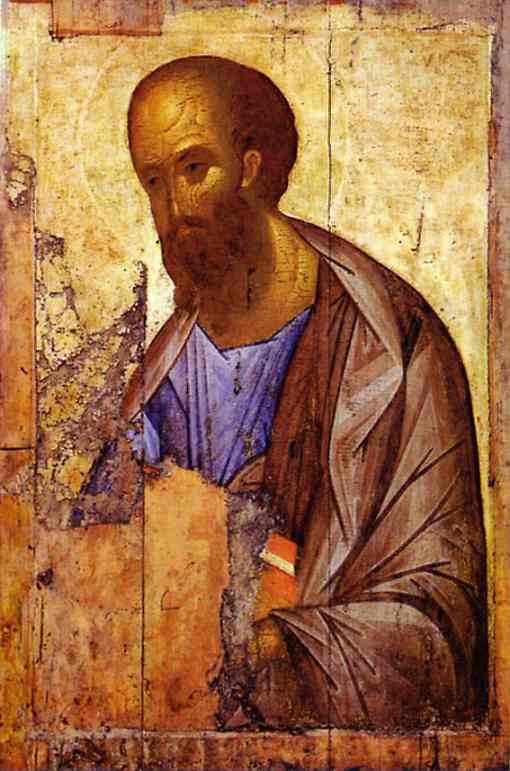
St. Paul

3rd Lectionary Verse

Philippians 3:4b-14

If anyone else thinks he has reasons to put confidence in the flesh, I have more: 5circumcised on the eighth day, of the people of Israel, of the tribe of Benjamin, a Hebrew of Hebrews; in regard to the law, a Pharisee; 6as for zeal, persecuting the church; as for legalistic righteousness, faultless.

7But whatever was to my profit I now consider loss for the sake of Christ. 8What is more, I consider everything a loss compared to the surpassing greatness of knowing Christ Jesus my Lord, for whose sake I have lost all things. I consider them rubbish, that I may gain Christ 9and be found in him, not having a righteousness of my own that comes from the law, but that which is through faith in Christ—the righteousness that comes from God and is by faith. 10I want to know Christ and the power of his resurrection and the fellowship of sharing in his sufferings, becoming like him in his death, 11and so, somehow, to attain to the resurrection from the dead.

Pressing on Toward the Goal
12Not that I have already obtained all this, or have already been made perfect, but I press on to take hold of that for which Christ Jesus took hold of me. 13Brothers, I do not consider myself yet to have taken hold of it. But one thing I do: Forgetting what is behind and straining toward what is ahead, 14I press on toward the goal to win the prize for which God has called me heavenward in Christ Jesus.

Analysis- In this lectionary passage out of Philippians we are able to get a glimpse of what it was like in the time Paul was writing this. People were making salvation about the law and also about timeless Jewish customs (namely circumcision). Paul explains how faultlessly he adhered to these laws and also how he persecuted the church. In fact, he says that all he gained or profited from the law is considered a loss for the sake of Christ. As we see in reading this, Paul thinks true righteousness comes from God and wishes to know Christ and the power of resurrection, moving forward and not looking back.
When reading this passage as well as Paul's other writings it brings a couple thoughts to mind:

1) Nothing we do to ourselves or in ceremony matters much in terms of our salvation, but these things are often emphasized. Not only are these things emphasized, but they are constantly being argued about. Each denomination has their own way of doing things, but I believe those things have their place.
Now, please don't mishear me; Ceremonies and sacraments are important as an outward expression of what's inside. I'm just saying that these things shouldn't be placed over the priority of loving God and loving people or working for the betterment of the community, etc. We shouldn't judge others for how they express their inner faith in ways different than we may express the same faith.

2) Though what we do may not impact our salvation, our salvation compels us to keep doing God's work. Ultimately our relationship with Christ is work. Many people have pointed out to me throughout my life that we're saved by grace, not works. While there is truth in this, I have never felt God's grace more than when I'm doing what I would consider to be God's work. No matter where we are spiritually, we can all contribute to the greater good within the body of Christ and there is no better way to put your trust in Christ than by "putting your money where your mouth is."

I may have gotten a bit off topic with those thoughts, but Paul brings that out of me. Nothing drains me more or rubs me the wrong way more than when petty ceremonial things get in the way of the communal relationship with Christ. In Paul's day it was Jewish Christians emphasizing circumcision among other things to newly converted Gentiles. Today, the list could be endless:

Arrangement of the sanctuary, music, order of worship, baptism, scriptural translation, preaching style, etc., etc., etc.

Is it wrong for certain things to prick our individual hearts? No. Is it wrong to prefer a certain worship style? No. These things only become barriers when they are the standard we hold everyone to, and in doing so we limit the endless ways God speaks to people. When something happens that we don't prefer in a worship setting, let's take comfort that God can use the same thing that may irk us to speak profoundly to someone else.

That's all for today. I'll try to post the last lectionary analysis tomorrow. As always, I appreciate any feedback or questions you might have.

God bless,

Jason

Wednesday, March 17, 2010

Lectionary Psalm


Psalm 126

A song of ascents.
1 When the LORD brought back the captives to a]">[a] Zion,
we were like men who dreamed. b]">[b]

2 Our mouths were filled with laughter,
our tongues with songs of joy.
Then it was said among the nations,
"The LORD has done great things for them."

3 The LORD has done great things for us,
and we are filled with joy.

4 Restore our fortunes, c]">[c] O LORD,
like streams in the Negev.

5 Those who sow in tears
will reap with songs of joy.

6 He who goes out weeping,
carrying seed to sow,
will return with songs of joy,
carrying sheaves with him.

That's it for today. I won't do analysis for Psalms or Proverbs but feel free to meditate on these types of verses. Tomorrow I'll try to better explain my general view on the scriptures and expound on my blog title as well as move on to the next lectionary verse with analysis.

Good night and God's peace.

God Provides (And So Should We)


1st Lectionary Verse (the other three verses will follow; the Psalm verse later tonight and the next two on Thursday and Friday FYI)

Isaiah 43: 16-21 (NIV)

16 This is what the LORD says—
he who made a way through the sea,
a path through the mighty waters,

17 who drew out the chariots and horses,
the army and reinforcements together,
and they lay there, never to rise again,
extinguished, snuffed out like a wick:

18 "Forget the former things;
do not dwell on the past.

19 See, I am doing a new thing!
Now it springs up; do you not perceive it?
I am making a way in the desert
and streams in the wasteland.

20 The wild animals honor me,
the jackals and the owls,
because I provide water in the desert
and streams in the wasteland,
to give drink to my people, my chosen,

21 the people I formed for myself
that they may proclaim my praise.

Analysis- This passage of the Bible is taken from the book of Isaiah, which is a book rooted in prophecy, both pointing to and fulfilled in Christ. That is, at least in my opinion, how scripture from this book should be looked at within the grand context. On a more specific look into what this passage means, we can look at chapter 43 and see at the beginning of the chapter focusing on the emphasis of importance in the formation of Israel (with Old Covenant realities in mind; I will give a general outlook of my scriptural perspective in a later post soon) and what God has done for Israel.

Verse 14 begins a different section of the chapter entitled "God's Mercy and Israel's Unfaithfulness." This weeks Old Testament lectionary passage focuses on God's mercy, but the verses following show how even the people of Israel (God's chosen people) have been unfaithful despite God's mercy. This leads to the prophecy of Israel's undoing which is embodied in what I believe is ultimately a bigger statement of mercy for all in the embodiment of Christ.

With that bit of context out of the way, we can look more closely at what the specific text says within verses 16-21 and how we can respond to it with full knowledge of the fulfillment of the prophecy and as followers of Christ or even those who aren't but can embrace the truth in the theme/moral of the verses. Verses 16 and 17 allude to the time when Moses led the Israelites out of Egypt across the Red Sea which was parted and which closed over the following Egyptians once the Israelites were safely on the other side.

Immediately following is a commandment to forget the past and look ahead to what the Lord will provide along with what he is providing. This section of verses closes with what I think is God's intention: That we give God our praises, not just because of what he has done, but what he is still doing and what he will do for us. I especially appreciate the imagery of water in the desert, which I take as a symbolic (and perhaps literal so long ago) expression for how God takes care of us in tough times.

With all that said, I must say that this passage still leaves the question of how we give God our praises, and that question has many answers. It would be easy to just praise God in private for what he has done for us as individuals, but I think that those of us who have made a commitment to follow Christ can (and should in my opinion) take this further. Matthew 25:40 popped into my mind as I read this: "....I tell you the truth, whatever you did for one of the least of these brothers of mine, you did for me." (NIV)

I'm sure we can all point out times in our lives where we had an opportunity to serve someone and took care of ourselves instead. I'm not saying this to make anyone feel guilty as I have done this more often than I would like to admit (my wife is pointing out my hypocrisy as I type this). We can provide for others in many ways, and this doesn't mean we have to bear the weight of the world on our shoulders. Quite the contrary; We can join with others to help each other. On an individual level, those of you with children or families probably serve someone in a small but significant way multiple times everyday.

I guess to sum it all up, we should be Christ to others because of what continues to be done in us and as best as we can we shouldn't prevent ourselves from helping those who we might not normally see fit to deserve our mercy. God showed mercy to Israel IN SPITE of Israel's unfaithfulness. Wouldn't it be beneficial for us to care for those on the margins of society? Let's keep in mind that as we serve others we find ourselves being served as we open ourselves up to God working in us.