Showing posts with label New Testament. Show all posts

Saturday, March 20, 2010

Not Waiting to Share Love for Others


Mary Washing Jesus' Feet With Nard


4th Lectionary Verse

John 12:1-8 (New International Version)

John 12

Jesus Anointed at Bethany
1Six days before the Passover, Jesus arrived at Bethany, where Lazarus lived, whom Jesus had raised from the dead. 2Here a dinner was given in Jesus' honor. Martha served, while Lazarus was among those reclining at the table with him. 3Then Mary took about a pinta]">[a] of pure nard, an expensive perfume; she poured it on Jesus' feet and wiped his feet with her hair. And the house was filled with the fragrance of the perfume.

4But one of his disciples, Judas Iscariot, who was later to betray him, objected, 5"Why wasn't this perfume sold and the money given to the poor? It was worth a year's wages.b]">[b]" 6He did not say this because he cared about the poor but because he was a thief; as keeper of the money bag, he used to help himself to what was put into it.

7"Leave her alone," Jesus replied. " It was intended that she should save this perfume for the day of my burial. 8You will always have the poor among you, but you will not always have me."

Analysis- Have you ever wanted to tell someone how you feel about them but didn't because of embarrassment, or busyness, or pride, etc.? Time goes by and then the person we care for passes on and we wish we'd had one last moment to tell them what they meant to us or that we'd loved them. I don't believe we should live in regret, but I'm also sure that this happens more often then we'd like to admit and it can leave a sour taste in our mouths.
In the lectionary passage I'm covering in this post, Mary does the opposite of the situation I've just mentioned. Not only does she do the opposite, but she takes it to the extreme. Giving some depth to the story, we can see that earlier in John that Jesus had raised her brother Lazarus from the dead. Her family was hosting a dinner in Jesus' honor and she takes the opportunity to take a bottle of nard (expensive perfume; see link: http://www.biblefragrances.net/nard.html) and wash Jesus' feet with it using her hair!
Judas Iscariot (the disciple who will betray Jesus) was seemingly disgusted by this gesture. He objects in the guise of righteousness, claiming that the perfume could be sold and the money given to the poor. The text says Judas doesn't object out of any concern for the poor, but because he was keeper of the money bag and would help himself to money that was put into the bag. This was likely money that would otherwise be used to help the poor.
Jesus sees right through this and says something interesting: "Leave her alone.....It was intended that she should save this perfume for the day of my burial. You will always have the poor among you, but you will not always have me."

Two things stick out to me in that statement:

1) Without comparing anyone to Jesus, doesn't this make a statement that we shouldn't wait for the funeral to honor someone? I'm not saying we shouldn't respect people as we remember their lives, but should we say something at a funeral about someone that we didn't tell them while they were still living?

2) There are poor people all around us. Not just materially poor, but spiritually poor as well. This passage is a statement about serving others, and not just in charitable ways. In fact, one could argue that Jesus is speaking about honoring the poor as equals. Charity seems to always be about those with helping those without, and often times those offering the charity are unable to see how the poor have as much to give as those who seemingly have more.
Sometimes we give only to reassert our own state of well being and a for a sense of pride and entitlement. Other times we do it to make ourselves look better in front of others. What would the world think if Bill Gates entered a soup kitchen, not to help serve the homeless, but to be served and to eat at the same table as the homeless? I think many would be caught off guard and in fact be speechless.

Charity isn't all bad, but as we go into our different places of worship tomorrow or as we just go about our day, let's remember that serving others doesn't always mean what we think it does. Let's do the best we can to see those with less than we may have as equals and realize that we can be served by them as much as we serve them.

Hope that makes sense and remember to be free to ask questions or comment.

God bless and tune in for next week,

Jason

Friday, March 19, 2010

Trusting Jesus


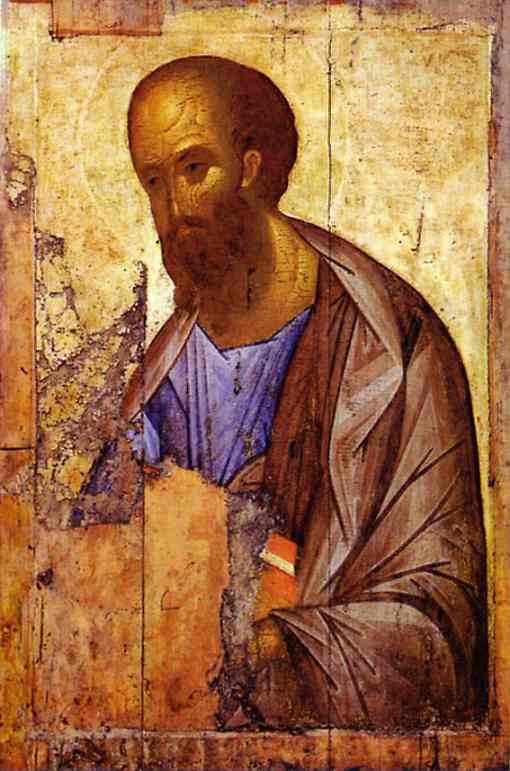
St. Paul

3rd Lectionary Verse

Philippians 3:4b-14

If anyone else thinks he has reasons to put confidence in the flesh, I have more: 5circumcised on the eighth day, of the people of Israel, of the tribe of Benjamin, a Hebrew of Hebrews; in regard to the law, a Pharisee; 6as for zeal, persecuting the church; as for legalistic righteousness, faultless.

7But whatever was to my profit I now consider loss for the sake of Christ. 8What is more, I consider everything a loss compared to the surpassing greatness of knowing Christ Jesus my Lord, for whose sake I have lost all things. I consider them rubbish, that I may gain Christ 9and be found in him, not having a righteousness of my own that comes from the law, but that which is through faith in Christ—the righteousness that comes from God and is by faith. 10I want to know Christ and the power of his resurrection and the fellowship of sharing in his sufferings, becoming like him in his death, 11and so, somehow, to attain to the resurrection from the dead.

Pressing on Toward the Goal
12Not that I have already obtained all this, or have already been made perfect, but I press on to take hold of that for which Christ Jesus took hold of me. 13Brothers, I do not consider myself yet to have taken hold of it. But one thing I do: Forgetting what is behind and straining toward what is ahead, 14I press on toward the goal to win the prize for which God has called me heavenward in Christ Jesus.

Analysis- In this lectionary passage out of Philippians we are able to get a glimpse of what it was like in the time Paul was writing this. People were making salvation about the law and also about timeless Jewish customs (namely circumcision). Paul explains how faultlessly he adhered to these laws and also how he persecuted the church. In fact, he says that all he gained or profited from the law is considered a loss for the sake of Christ. As we see in reading this, Paul thinks true righteousness comes from God and wishes to know Christ and the power of resurrection, moving forward and not looking back.
When reading this passage as well as Paul's other writings it brings a couple thoughts to mind:

1) Nothing we do to ourselves or in ceremony matters much in terms of our salvation, but these things are often emphasized. Not only are these things emphasized, but they are constantly being argued about. Each denomination has their own way of doing things, but I believe those things have their place.
Now, please don't mishear me; Ceremonies and sacraments are important as an outward expression of what's inside. I'm just saying that these things shouldn't be placed over the priority of loving God and loving people or working for the betterment of the community, etc. We shouldn't judge others for how they express their inner faith in ways different than we may express the same faith.

2) Though what we do may not impact our salvation, our salvation compels us to keep doing God's work. Ultimately our relationship with Christ is work. Many people have pointed out to me throughout my life that we're saved by grace, not works. While there is truth in this, I have never felt God's grace more than when I'm doing what I would consider to be God's work. No matter where we are spiritually, we can all contribute to the greater good within the body of Christ and there is no better way to put your trust in Christ than by "putting your money where your mouth is."

I may have gotten a bit off topic with those thoughts, but Paul brings that out of me. Nothing drains me more or rubs me the wrong way more than when petty ceremonial things get in the way of the communal relationship with Christ. In Paul's day it was Jewish Christians emphasizing circumcision among other things to newly converted Gentiles. Today, the list could be endless:

Arrangement of the sanctuary, music, order of worship, baptism, scriptural translation, preaching style, etc., etc., etc.

Is it wrong for certain things to prick our individual hearts? No. Is it wrong to prefer a certain worship style? No. These things only become barriers when they are the standard we hold everyone to, and in doing so we limit the endless ways God speaks to people. When something happens that we don't prefer in a worship setting, let's take comfort that God can use the same thing that may irk us to speak profoundly to someone else.

That's all for today. I'll try to post the last lectionary analysis tomorrow. As always, I appreciate any feedback or questions you might have.

God bless,

Jason